





Listed in Asset Management
Stormwater infrastructure is easy to forget because, when it's working properly, most people never notice it. Culverts quietly carry water beneath roads. Catch basins collect runoff before it floods intersections. Drywells accept stormwater and allow it to infiltrate into the surrounding soil. These assets perform their jobs silently for decades. That is, unless they're forgotten and not maintained.
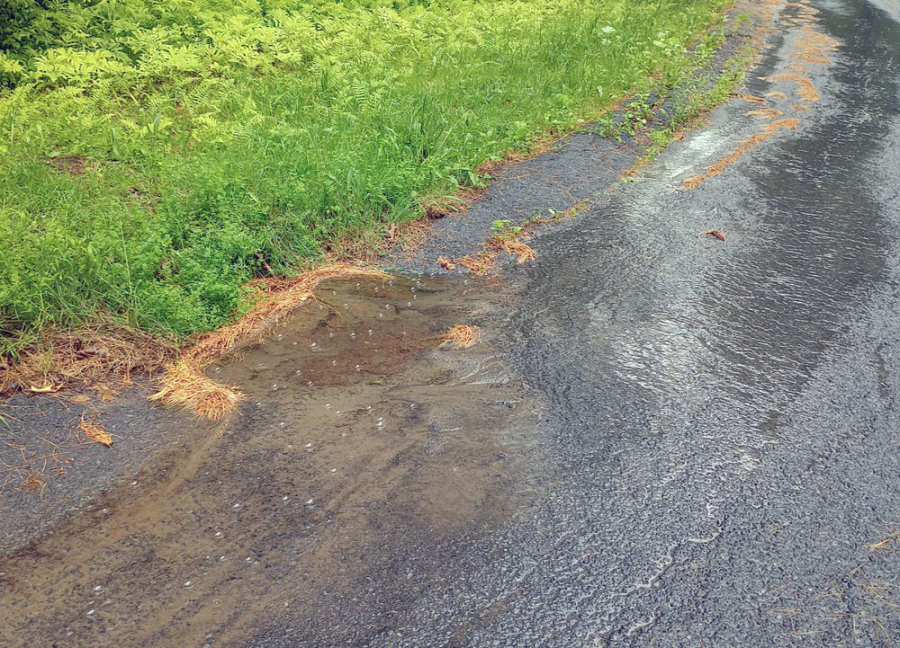
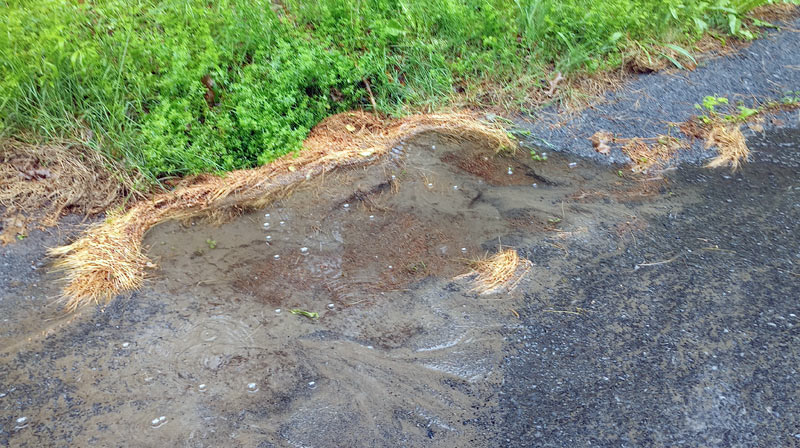
I was reminded of that recently after a heavy rainstorm. I have an odd habit of hopping in my car and seeking-out stormwater infrastructure photo opportunities when it's downpouring. That's how I get some of the photos I use when I write about catch basins, drywells, etcetera for this and various other websites. Anyway, while driving along a local road, I noticed water pooling along the edge of the pavement. At first glance, it looked like a typical drainage problem. But as I looked closer, I realized something interesting was happening. Water was flowing toward what should have been a stormwater inlet, only to spread out and bypass it almost entirely.
The reason quickly became obvious. The inlet had disappeared.
Not physically, of course. It was still there, but years of accumulated pine needles, sand, and organic debris had completely buried the grate. On a dry day, you would never know a stormwater drain existed at that location. The only clue was a faint rectangular depression in the pavement, now completely filled with sediment. It wasn't simply clogged. It had become invisible.
The road has "wings," and the opening in the paved wing still allowed a small amount of water to enter. However, the grate itself had effectively become part of the road's shoulder, buried beneath years of neglect. During the storm, water pooled on top of the compacted sediment before eventually flowing around the inlet instead of through it.
Someone, many years ago, recognized that this location needed drainage. Taxpayer money paid for the excavation, materials, labor, and restoration of the roadway. Today, that investment is providing only a fraction of the protection it was built to provide.
A Missing Mark Tells an Important Story
What made the situation even more interesting was something that wasn't there. In my town, highway crews typically spray paint markings on the pavement next to stormwater structures immediately after they inspect or clean them. Those markings don't merely say "we were here this year," they also help crews relocate assets that might otherwise become hidden beneath leaves, gravel, or snow. This inlet had no marking. That strongly suggests nobody knows it's there anymore. The drain has likely been buried long enough that it disappeared from everyone's routine maintenance schedule. Without an inventory, forgotten infrastructure eventually becomes abandoned infrastructure.
Infrastructure Doesn't Stop Aging Just Because You Stop Seeing It
Many people assume that once a drain is buried, the worst consequence is poor drainage. Unfortunately, that's only the beginning. Drywells, catch basins, and similar underground structures continue aging whether they're maintained or not. Mortar joints deteriorate., concrete cracks, metal components corrode, and freeze-thaw cycles weaken the surrounding pavement. Eventually, the buried grate or pavement above the structure can collapse into the deteriorating chamber below.
What began as an overlooked maintenance issue can become a serious roadway hazard requiring emergency repairs. By then, the repair costs are almost always far greater than the cost of routine inspections and cleaning would have been.
Asset Management Prevents Infrastructure From Disappearing
This is exactly why municipalities should inventory every stormwater asset they own. An asset management system creates a permanent record of infrastructure that survives personnel changes, retirements, and decades of institutional memory loss.
Each asset should include information such as:
- GPS location
- Asset type
- Size and construction material
- Installation date (if known)
- Photographs
- Inspection history
- Maintenance records
- Condition assessments
- Repair history
When every structure exists in a searchable database, crews no longer depend on memory to remember what lies beneath the leaves. Even if an inlet becomes completely buried, the asset still appears on inspection schedules. Someone will eventually be sent to find it.
Forgotten Assets Become Wasted Investments
Every stormwater structure represents a significant investment, including planning, engineering, permitting, excavation, materials, equipment, labor, traffic control. road restoration. When that asset disappears beneath years of accumulated debris, much of that investment is effectively lost. The municipality continues to own the infrastructure, but it no longer receives the benefit it paid to build. That's not simply poor maintenance. It's poor asset management and a waste of taxpayer funds.
Good Records Improve Long-Term Planning
Asset inventories also help municipalities make smarter financial decisions. Knowing the location, age, condition, and maintenance history of every stormwater structure allows departments to identify patterns before failures occur.
Managers can answer important questions such as:
- Which drywells fill with sediment the fastest?
- Which catch basins require cleaning multiple times each year?
- Which structures are nearing the end of their service life?
- Which neighborhoods experience recurring drainage complaints?
- Which assets should be replaced during upcoming road reconstruction projects?
Instead of reacting to emergencies, departments can plan maintenance and capital improvements years in advance.
Infrastructure Only Has Value If It Continues Working
The buried inlet I observed still exists. It still occupies space beneath the road. It still represents thousands of dollars in public investment. But until someone rediscovers it, excavates the accumulated sediment, and restores its function, it is providing only a small portion of the drainage protection it was originally intended to provide.
Stormwater assets don't disappear overnight. They disappear gradually, one season of leaves, one load of sand, and one missed inspection at a time. An effective asset management system ensures that never happens. Because infrastructure only delivers value when someone remembers it's there.