





Listed in Asset Management
Every highway department fills potholes. It's one of those jobs that never truly ends and, put plainly, potholes are a massive pain in the ass. As soon as you think you've caught up, another freeze-thaw cycle, heavy rain, or overloaded truck creates a fresh crop of pavement failures that demand attention. Because pothole repair is such a routine task, many departments simply fix them and move on. Once the hole is filled, the paperwork ends. In my opinion, that's a missed opportunity. I believe every highway department should keep a record of every pothole they repair.
At first glance, that may sound like unnecessary paperwork, especially for small departments with limited staff. In reality, documenting potholes can provide valuable information that improves maintenance planning, supports budgeting, protects the municipality, and ultimately helps crews spend less time repairing the same roads over and over again.
Potholes Tell a Story
A pothole rarely appears by accident. It is usually a symptom of a larger problem. Water has entered the pavement, the road base has weakened, traffic has stressed the surface, and eventually the asphalt gives way. When you document where potholes occur, you begin to see patterns. You may notice that one stretch of road requires repairs every spring while another remains in excellent condition. Certain intersections may develop potholes repeatedly because vehicles brake and accelerate there every day. Low areas that collect water may consistently experience pavement failures.
Without records, these observations often depend on memory. With records, they become facts.
Identifying Roads That Need More Than Another Patch
Every superintendent has roads that seem to consume an endless supply of cold patch. When pothole repairs are tracked, it becomes much easier to identify roads that have reached the point where patching is no longer cost effective. If a road required thirty pothole repairs over the past twelve months, that information helps justify resurfacing or reconstruction. Instead of saying, "This road is getting pretty bad," you can say, "We've repaired sixty thirty here this year alone." That is a much stronger argument when discussing budgets with elected officials.
Better Budget Planning
Pothole records also reveal how much labor and material are being invested in reactive maintenance. Many departments know how many tons of asphalt they purchase each year, but they don't always know where that material was used.
By tracking repairs, you can answer questions such as:
- Which roads consume the most patching material?
- Which areas require repeated visits?
- How many labor hours are devoted to pothole repair?
- Are pothole repairs increasing each year?
Those trends become valuable during budget preparation because they provide measurable evidence instead of estimates.
Improving Crew Efficiency
Tracking potholes can also improve daily operations. If multiple potholes are reported in the same neighborhood, crews can repair them during one trip instead of making several separate visits. Over time, departments can also compare repair methods. Perhaps one type of patching material lasts significantly longer than another. Maybe potholes repaired during warmer weather outperform emergency winter repairs. Good records allow departments to learn from experience rather than relying solely on memory.
Responding to Citizen Complaints
Residents frequently call to report potholes. When those reports are documented, staff can quickly determine whether the pothole has already been reported, whether it has been repaired, or whether additional work is scheduled. If a resident calls back several weeks later, the department has a complete history of what occurred instead of trying to remember whether someone fixed it. That level of documentation demonstrates professionalism and helps build public confidence.
Protecting the Municipality
Potholes can damage vehicles or even be the direct cause of a motor vehicle accident, and occasionally those damages result in claims against the municipality. While laws vary from state to state, documentation can become extremely valuable. A record showing when a pothole was reported and when it was repaired demonstrates that the department responded appropriately. Likewise, if multiple complaints were received about the same location, the documentation shows exactly what actions the department took. Good records cannot prevent every claim, but they often provide important evidence that the department acted responsibly.
Supporting Long-Term Pavement Management
One of the greatest benefits of pothole tracking is that it contributes to long-term asset management. Potholes are one indicator of pavement condition. Roads with frequent pothole activity often deserve closer inspection and may need crack sealing, drainage improvements, resurfacing, or full reconstruction. Over several years, pothole records become another data point that helps determine where limited paving dollars will have the greatest impact. Instead of relying on who complains the loudest or which road looks the worst on a quick drive-by, decisions can be based on documented maintenance history.
Technology Makes It Easy
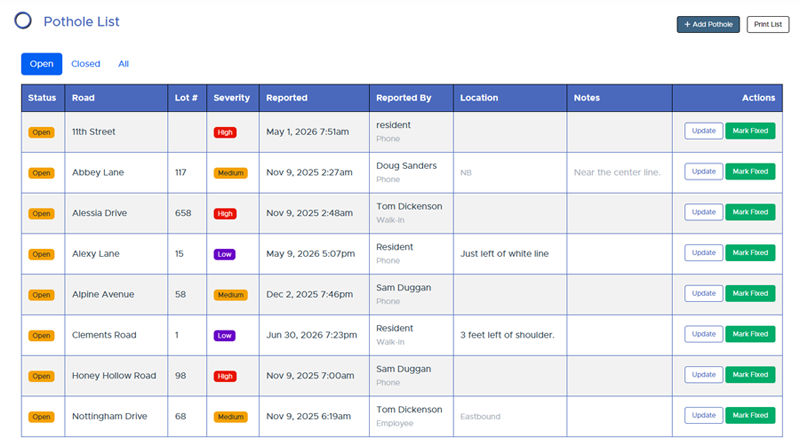
Years ago, tracking potholes meant maintaining paper maps and filing cabinets. Today, a crew can record a pothole in seconds using a computer, tablet, or smartphone. The location, repair date, crew, materials used, photographs, and notes can all be stored in one place and retrieved whenever needed. Even a small amount of information collected consistently becomes an incredibly valuable database over time.
There are some truly impressive AI-driven asset management software systems out there that can track every nook and cranny of your roads, but even a simple and affordable software like Roadwurx gives you the ability to track pothole reports and repairs.
Small Records Create Big Benefits
Potholes may be one of the smallest assets a highway department manages, but the information they provide is surprisingly valuable. Every repair tells you something about the condition of your roads. Every recorded location helps identify patterns. Every documented repair strengthens accountability. And every year of accumulated data helps departments make smarter decisions about maintenance, budgeting, and capital improvements.
Fixing potholes is an important job. Learning from them is even more valuable.