





Listed in Daily Tasks
For many organizations, safety training is measured by spreadsheets. How many days since the last injury? How many OSHA recordables? How many hours of annual safety training have been completed? These numbers matter. They reduce liability, lower workers' compensation costs, and help ensure regulatory compliance. But if those are the only reasons a department invests in safety, it has missed the point entirely. The real purpose of safety is much simpler. It is about making sure every employee goes home to their family at the end of the day.
A Different Way to Think About Safety
Highway departments perform some of the most hazardous work in local government. Employees work around moving traffic, heavy equipment, power tools, chainsaws, excavation sites, confined spaces, high-voltage electrical systems, and unpredictable weather. The risks are real. Yet the greatest safety programs are not built on fear of accidents or concern over lawsuits. They are built on genuine concern for one another. A true safety mindset exists when employees stop thinking, "How do I keep myself safe?" and instead begin asking, "How do I help everyone around me stay safe?" That subtle shift changes everything.
Looking Out for One Another
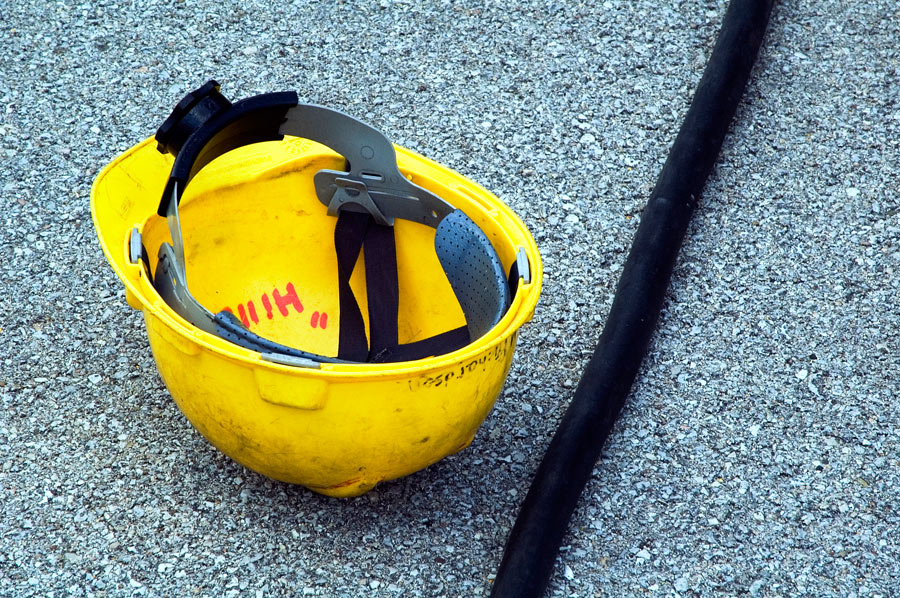
Think about the small interactions that happen throughout the workday. One employee notices a coworker's safety glasses are missing. "Hey, grab your glasses before you start." Someone sees another employee climbing onto equipment without a hard hat. "Don't forget your helmet." A mechanic notices a slick patch of oil on the garage floor. "Watch your step over there." A crew member filling potholes in July notices another worker looking exhausted. "When was the last time you had some water?"
None of these moments require a formal safety meeting. None of them involve paperwork. But every one of them reinforces a culture where employees understand that everyone is responsible for everyone else's well-being. When these habits become routine, speaking up is no longer viewed as criticism. It becomes an act of respect.
The Small Things Build the Big Things
Some people dismiss everyday hazards because they seem insignificant. A loose extension cord, a forgotten pair of gloves, a small patch of ice outside the garage, or a ladder that wasn't properly secured. These may seem like minor issues compared to traffic control or operating heavy machinery. They are not. Paying attention to small risks trains the brain to recognize larger ones.
Risk awareness is a skill. Like any skill, it improves with practice. Employees who automatically notice a slipping hazard on the garage floor are often the same employees who notice an unstable trench wall, a distracted motorist entering the work zone, or equipment positioned too close to overhead power lines. The habit of seeing hazards before they become accidents is developed one observation at a time.
Speaking Up Is a Sign of Respect
One of the biggest obstacles to workplace safety is silence. Nobody wants to embarrass a coworker. Nobody wants to sound bossy. Nobody wants to be "that person." But a mature safety culture removes that stigma. The expectation becomes simple. If you see something unsafe, you say something. Not because you're trying to get someone in trouble. Because you care. A simple sentence like, "Hey, put on your hard hat," could prevent a life-changing injury. Good coworkers don't ignore hazards. They protect one another.
Some Images Never Leave You
Many highway professionals have spent decades in public works. During those careers, some have witnessed incidents they wish they had never seen: equipment rollovers, traffic strikes, falls, electrocutions, and fatal crushing injuries. For those who have experienced a workplace fatality, the memories often remain vivid decades later. The emotional impact extends far beyond the individual who lost their life. Coworkers replay the event in their minds. Supervisors question every decision they made. Friends wonder if there was something they could have done differently. Families lose a loved one. Entire departments are changed forever. These are burdens that no statistic can measure.
Preventing an accident isn't just about avoiding paperwork or insurance claims. It is about preventing trauma that can affect dozens of people for the rest of their lives.
Leaders Set the Tone
Employees quickly learn what their supervisors truly value. If safety meetings become little more than checking a box, employees notice. If supervisors ignore shortcuts because the crew is behind schedule, employees notice that too. On the other hand, leaders who consistently demonstrate that safety comes before convenience send a powerful message. That means stopping work when conditions become unsafe. Providing proper equipment. Encouraging employees to report hazards without fear of criticism. Thanking workers who speak up. Most importantly, it means treating every employee as someone whose life genuinely matters.
Safety Is Everyone's Responsibility
The strongest safety cultures aren't built by one safety coordinator or one department head. They are built by everyone. The truck driver who reminds a new employee to buckle up. The equipment operator who waits until everyone is clear before moving. The mechanic who tags out faulty equipment. The laborer who notices a dangerous condition and speaks up immediately. Every employee has the opportunity to protect someone else. That responsibility is both a privilege and an obligation.
The Measure of Success
The best safety programs aren't remembered because they had the thickest manuals or the most impressive compliance records. They're remembered because employees trusted one another. Because coworkers felt comfortable speaking up. Because everyone understood that their department cared about people more than productivity.
At the end of every workday, every employee should return home with nothing more serious than being tired from an honest day's work. That is the real goal of safety. Not avoiding citations. Not lowering insurance premiums. Not reducing liability. Simply making sure that the people who started the day together have the opportunity to go home to the people waiting for them.