





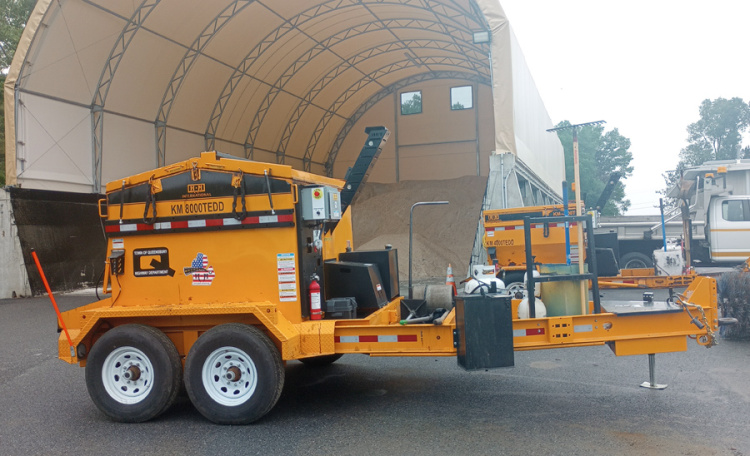
Listed in Road Maintenance
There are very few pieces of equipment that can pay for themselves as quickly as an asphalt hot box. Many small highway departments view hot boxes as equipment reserved for counties, cities, or large paving contractors. In reality, an asphalt hot box may be one of the most valuable and cost-effective pieces of road maintenance equipment a small town can own. Whether your municipality maintains 20 miles of road or 200, potholes do not care about your budget, your staffing levels, or whether the local asphalt plant is open for the season. An asphalt hot box gives highway departments the ability to make permanent repairs on their schedule rather than someone else's.
I have had crew members tell me that they heat-up their lunches against the rear hatch of the hot box. Sure, it's practical, and I used to heat-up my MREs on a large generator when I was in the Army, but I wouldn't suggest cooking unsealed food next to an oven of petroleum. But that's just me.
The Winter Pothole Problem
Northern highway departments face the same challenge every year. January arrives. Then February. Freeze-thaw cycles begin attacking pavement joints and cracks. Snowplows remove the protective layer of snow and expose weakened pavement to traffic loads. Water infiltrates cracks, freezes, expands, and breaks apart the surrounding asphalt. Suddenly potholes appear everywhere. (And the phone calls from angry residents come immediately thereafter.)
Unfortunately, this often happens during the exact time of year when local asphalt plants are closed for the season. The result is that highway crews are forced to rely on bagged cold patch materials or stockpiled cold mix products that frequently perform poorly and often fail within days or weeks. Residents become frustrated because the same pothole is repaired repeatedly. Crews become frustrated because they know the repair is temporary before they even leave the site.
An asphalt hot box changes that equation.
Reclaiming Asphalt Chunks and Millings
Modern asphalt hot boxes do far more than simply transport hot asphalt.
Many units are capable of reclaiming and reheating:
- Leftover hot mix asphalt
- Chunked asphalt
- Reclaimed asphalt pavement (RAP)
- Asphalt millings
- Material removed during previous repairs
This capability is particularly valuable for northern municipalities. Instead of hauling broken pavement to a stockpile and forgetting about it, crews can recycle the material into usable patching asphalt months later. Some hot box reclaimers can restore reclaimed material back to workable temperatures over the course of several hours or overnight. For small towns with limited budgets, turning waste material back into a useful product represents a significant savings.
Permanent Repairs Instead of Temporary Repairs
The biggest advantage of a hot box is simple:
Hot asphalt creates better repairs. Hot mix asphalt bonds to surrounding pavement far better than cold patch products, compacts more effectively, and generally lasts much longer in service. Maintaining proper asphalt temperature allows crews to make repairs that are closer to permanent pavement restoration rather than temporary emergency fixes.
That means:
- Fewer repeat visits
- Less labor
- Less equipment time
- Lower fuel consumption
- Fewer complaints from residents
The cheapest pothole repair is often the one you only have to perform once.
Keep Asphalt Hot All Day
Anyone who has picked up hot mix from an asphalt plant understands the race against time that follows. The material begins cooling immediately. By late morning, material near the tailgate is stiffening. By lunch, compaction becomes difficult. By mid-afternoon, the crew is often working with asphalt that should have been discarded hours earlier.
An asphalt hot box eliminates this problem. The unit continuously maintains the asphalt at proper working temperatures throughout the workday, allowing crews to focus on making quality repairs instead of rushing to beat the cooling clock. Some units can maintain workable temperatures for 48 hours or longer if necessary. This is especially beneficial for rural highway departments that may spend significant time traveling between repair locations.
Reduce Waste and Save Money
Without a hot box, leftover asphalt frequently becomes waste.
Crews either:
- Throw it away.
- Allow it to cool and harden.
- Attempt to use partially cooled material the following day.
A hot box allows municipalities to preserve or reclaim unused material rather than disposing of it. Many reclaimers can reheat leftover asphalt overnight for use the following day. Over the life of the machine, the reduction in wasted asphalt alone can offset a substantial portion of the purchase price.
Extend Your Paving Season
Many highway departments think of asphalt work as a summer activity.
A hot box extends that season significantly.
Crews can perform:
- Pothole repairs
- Utility cut repairs
- Shoulder repairs
- Small dig-outs
- Catch basin adjustments
- Minor grind and patch operations
Instead of waiting for paving season to begin, municipalities can address defects when they appear. This prevents minor pavement damage from becoming major pavement failures.
The Perfect Size for Small Towns
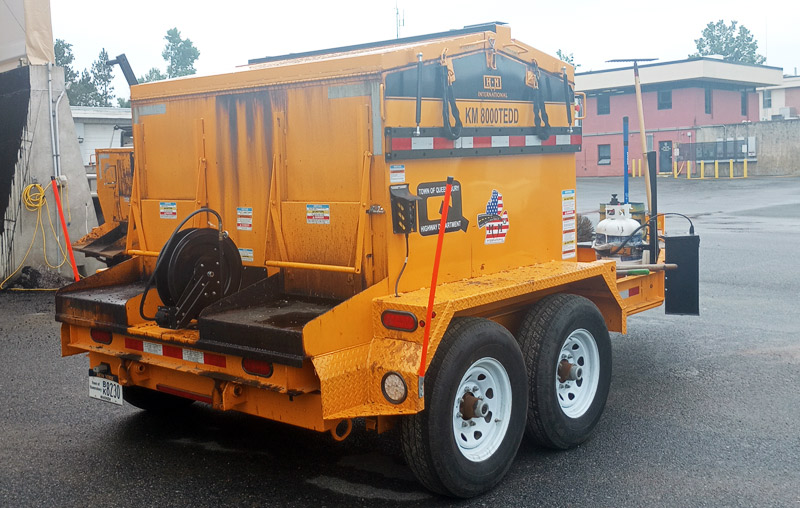
Many municipalities assume they need a large truck-mounted unit. Most do not. For many towns, villages, and rural highway departments, a two-ton trailer-mounted hot box is the ideal solution. A two-ton unit provides enough material for a full day of pothole repair while remaining affordable, easy to tow, and simple to store. Two-ton units are among the most popular sizes for small operations and can typically be towed by existing municipal dump trucks or pickups. For larger towns or more aggressive pavement maintenance programs, a four-ton unit offers additional flexibility.
Four-ton hot boxes are ideal for:
- Large pothole programs
- Utility trench restoration
- Shoulder reconstruction
- Small mill and fill operations
- Grind and patch projects
- Supporting multiple crews simultaneously
Many municipalities find the four-ton size becomes the backbone of their asphalt maintenance operation.
Improve Crew Efficiency
A hot box changes the way pothole crews operate. Instead of making multiple trips to the asphalt plant, waiting in line behind paving contractors, or cutting the workday short because material cooled too quickly, crews can remain productive throughout the day.
The result is:
- More repairs completed
- Better material quality
- Less downtime
- Lower fuel consumption
- Better use of employee time
For departments operating with only two or three highway employees, these efficiencies matter.
Improve Public Perception
Residents notice potholes. They also notice when the same pothole is repaired four times in one winter. Repeated failures create the impression that the highway department is doing poor work, even when crews are simply limited by available materials. Permanent repairs improve public confidence and reduce complaints. In many communities, that alone can justify the investment.
A Piece of Equipment That Earns Its Keep
Highway departments purchase equipment for many reasons. Some equipment is necessary but rarely used. Some equipment is used frequently but does not save money. An asphalt hot box does both. It reduces material waste, improves repair quality, extends the paving season, increases crew productivity, and allows municipalities to recycle material that would otherwise be discarded.
For northern highway departments in particular, it fills the critical gap between winter pothole season and spring asphalt production. A grader may be more impressive. A paver may be more expensive. But dollar for dollar, few pieces of equipment deliver a better return on investment than an asphalt hot box. For many highway departments, the question is not whether they can afford one. The better question may be whether they can afford not to own one.