





Listed in Daily Tasks
Losing a public works department’s front-line fleet is a gut punch on every level: the price tag alone is staggering, with each modern plow truck now ringing in at $250,000 - $300,000, and lead-time bottlenecks mean replacements ordered today may not roll onto the lot for 12 to 18 months. While crews wait, snow and ice don’t; without those trucks the department can’t clear roads, patch potholes, or haul materials, leaving residents stranded and critical services - police, fire, EMS - risking delays. Add in the cost of rebuilding a garage, often several million dollars once code upgrades and environmental remediation are factored in, and a single fire can wipe out decades of capital investment while instantly crippling the department’s ability to keep the community moving and safe.
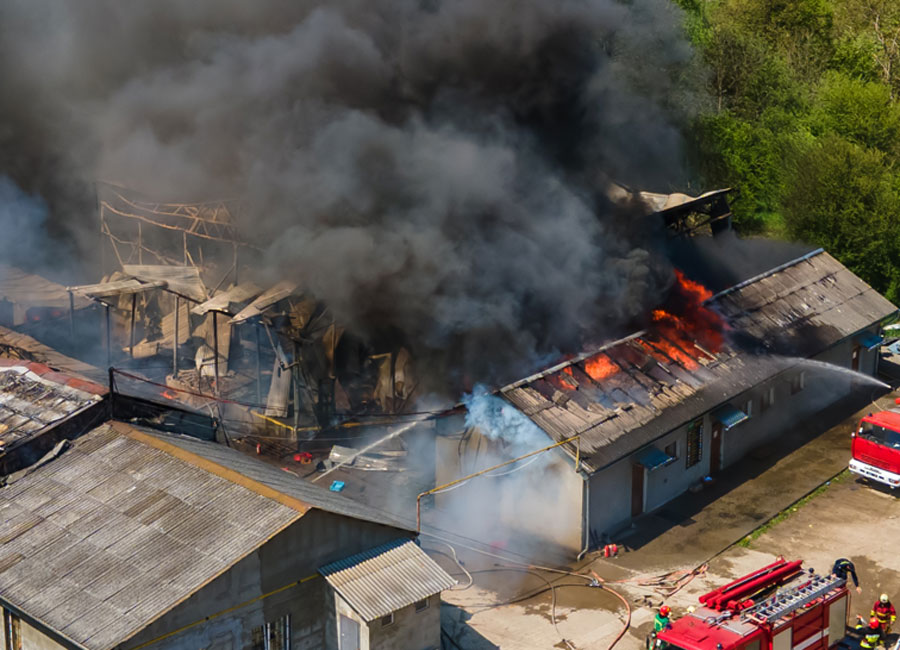
When a truck catches fire indoors at 2 a.m., the radiant heat and dense smoke spread quickly to the next vehicle, then the roof trusses, until the entire fleet and building are a total loss. Recent municipal examples include:
Town of Minden, NY (2023) - garage and most snow-plow fleet destroyed despite a three-hour fire fight.(Mohawk Valley Today)
Millerton, NY (2025) - pre-dawn blaze leveled the water & highway building, taking out multiple dump trucks and loaders.(The Millerton News)
Why diesel trucks “self-ignite” while parked
| Common hidden ignition sources | How the fire develops while unattended |
|---|---|
| Chafed battery cables & starter studs vibrate and arc until nearby wiring or oil-soaked grime ignites. A June 2025 recall of 21,560 Western Star 47X/49X trucks was triggered by exactly this defect.(Overdrive) | Arc sets wiring loom alight → plastics melt → flaming drips onto engine fluids and floor. |
| Block-heater cords or portable chargers left energized overnight overheat extension cords or receptacles. | Heat builds under hood, unnoticed until smoke triggers alarms (if any). |
| Parasitic loads (ECUs, telematics, dome lights) keep circuits energized 24/7; a single short can start a fire hours after shutdown. | Fire grows inside tightly packed engine bay, reflected heat shatters windshield; free oxygen rushes in and flashover occurs. |
Without someone on site, minutes become critical: sprinklers (if present) may not reach under hoods or inside cabs, and trucks typically sit door-to-door with full fuel and hydraulic-oil loads, creating an intense, long-duration fire that readily collapses lightweight metal buildings.
How a battery-disconnect switch breaks the chain reaction
A master battery-disconnect (MBD) switch is a heavy-duty manual switch installed in the main positive cable, normally mounted on the frame rail or battery box and actuated from outside the cab. Turning it off when the truck is parked:
-
Removes all 12/24-volt sources of ignition, no current, no arcing.
-
Eliminates parasitic loads, preventing slow short-circuits and preserving battery health.
-
Allows safe maintenance and welding.
-
Provides first-responder shut-down in seconds.
Industry guidance notes that an MBD “plays a crucial role in protecting commercial vehicles; it is mandatory for many kinds of commercial vehicles” and offers clear safety, security and cost-saving benefits.
Insurance is starting to require it
The New York Municipal Insurance Reciprocal (NYMIR) now conditions physical-damage coverage for heavy trucks on proof of working battery-disconnect switches; non-compliant vehicles are settled at actual-cash value only.(Town of Olive) Several other public-entity carriers have adopted similar endorsements or provide premium credits for documented use.
Best-practice checklist for public works and highway departments
| Step | What to do | Why it matters |
|---|---|---|
| Specify the switch | 300 A continuous / 3 000 A intermittent rating; IP-67 sealed housing; pad-lockable lever. | Handles winter cold-crank amps and survives road salt. |
| Locate for easy shut-off | Frame rail just behind cab, or battery box face; label with reflective “Battery OFF Here” decals. | Drivers and firefighters can reach it without opening hood. |
| Integrate into SOPs | “Last-man-out” checklist: (1) park, (2) turn ignition off, (3) switch to OFF, (4) plug block heater only after switch is OFF (if used). | Prevents forgetting the switch; avoids energized block-heater cords. |
| Train & audit | Monthly inspection: verify switch operation, look for melted cables, test block-heater cords. | Creates documentation for insurers & OSHA. |
| Supplemental protection | Heat-detector alarms, non-combustible wall between bays, sprinklers rated for 25 ft clearance, diesel-fuel isolation dumps. | Limits spread even if a fire starts from non-electrical causes. |
Return on investment
-
A quality MBD kit costs $120-$200 per truck installed, less than one set of drive tires.
-
Avoiding one $1 million garage fire preserves service continuity, spares taxpayers an emergency fleet rental, and prevents environmental cleanup of burned fluids.
-
Demonstrated compliance often yields 2-5 % fleet-physical premium reductions and avoids coverage disputes.
Key take-aways
-
Most parked-truck fires start electrically, long after the driver has gone home.
-
Once one truck lights off inside a metal building, the entire fleet is at risk, a pattern proven in multiple municipal losses.
-
A simple battery-disconnect switch, used every time, removes the primary ignition source and is increasingly required by insurers such as NYMIR.
-
Adoption is low-cost, quick, and pairs perfectly with training and documentation programs you already maintain for OSHA and ISO-9001.
Install master battery-disconnect switches on every heavy truck, make “Switch OFF” the default parking habit, and sleep easier knowing your fleet, and your taxpayers’ investment, are far less likely to go up in smoke. Superintendents should make period checks to ensure that drivers are using the battery disconnect switch, and announce the results of their checks in front of the assembled crew.