





Listed in Stormwater Management
For highway departments, managing water flow in roadside ditches is an essential part of maintaining road integrity and protecting the surrounding environment. One effective tool in the erosion control toolbox is the check dam - a small, temporary or permanent structure built across a ditch to slow water velocity, reduce erosion, and trap sediment.
Depending on the situation, different types of check dams can be used. Here’s a rundown of the most common options:
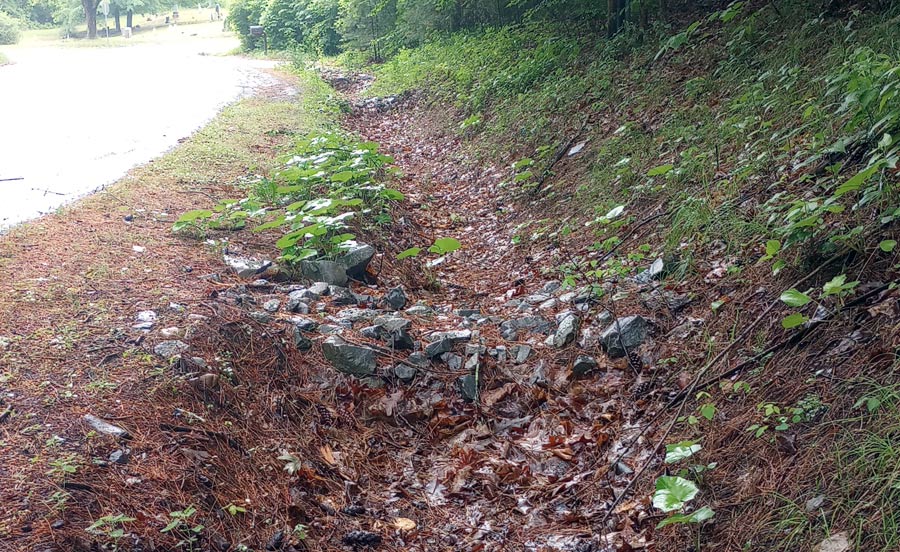
Rock Check Dams
Description: Built from riprap or other durable stone materials.
Best For:
- High-flow ditches
- Steep slopes
- Areas where durability is required
Advantages:
- Long-lasting
- Effective at slowing fast-moving water
- Can handle repeated storm events
Considerations:
- Higher installation cost
- Requires proper sizing and placement to avoid causing upstream flooding
Log or Timber Check Dams
Description: Made from logs, timber planks, or treated lumber.
Best For:
- Rural or forested areas
- Low-to-moderate flow ditches
- Temporary construction projects
Advantages:
- Readily available in some regions
- Cost-effective for temporary use
Considerations:
- Not suitable for high-flow or long-term use unless engineered properly
- Wood may deteriorate over time
Straw Bale Check Dams
Description: Straw bales staked across the ditch line.
Best For:
- Small construction sites
- Low-flow ditches
- Very temporary applications
Advantages:
- Inexpensive and easy to install
- Good for sediment control during short-term projects
Considerations:
- Degrades quickly and requires frequent replacement
- Not suitable for high-flow areas or long-term erosion control
Silt Fence Check Dams
Description: Silt fence fabric installed horizontally across a ditch.
Best For:
- Very low-flow ditches
- Construction sites
- Sediment control for new development areas
Advantages:
- Simple and quick to install
- Effective at trapping sediment
Considerations:
- Not designed to handle large volumes of water
- Can fail if overwhelmed by flow
Fiber Roll (Wattles) Check Dams
Description: Tubes filled with straw, coir, or synthetic materials staked into place.
Best For:
- Low to moderate flow ditches
- Stabilizing new slopes and ditch lines
- Vegetated ditches where long-term stabilization is planned
Advantages:
- Flexible and easy to install
- Biodegradable options available
- Helps promote vegetation growth
Considerations:
- Not suitable for very steep or high-flow channels
- Needs regular inspection and maintenance
Choosing the Right Check Dam
Selecting the appropriate type of check dam depends on several factors:
- Water flow rate (high flow vs. low flow)
- Ditch slope
- Duration of need (temporary vs. permanent)
- Budget
- Environmental considerations
In some cases, a combination of check dam types may be the most effective approach. For example, fiber rolls or silt fences might be used during construction, with rock check dams installed as part of permanent stabilization.